
When did long become a substitute for good? Somewhere between Oppenheimer and Napoleon, Hollywood decided runtime was a status symbol. It is not.
Let's be honest. No one really wants to watch a three-hour movie. You might think you do. You might even say you do. But when you’re shifting in your seat for the fifth time, checking your watch in the dark, and calculating how much of your life is being spent on a self-indulgent director’s cut, the truth bubbles up. You want it to be over.
This isn’t about a lack of appreciation for cinema. It’s about a lack of respect for the audience. The modern blockbuster has become a test of endurance, a cinematic marathon that leaves you feeling more exhausted than exhilarated. We’ve been conned into thinking that a film’s length is a measure of its importance, that a three-hour runtime is a sign of artistic ambition. It’s not. It’s a sign of a director who doesn’t know how to kill their darlings and an industry that has forgotten the value of a well-told story.
The Prestige of Patience
Somehow, in the last decade, we’ve collectively bought into the myth that a long movie is an important movie. The three-hour runtime has become a flex, a signal of artistic ambition and serious intent. It’s the cinematic equivalent of a tasting menu with too many courses. You’re not supposed to enjoy it all, you’re supposed to be impressed by the sheer audacity of it. Christopher Nolan’s Oppenheimer clocked in at a cool three hours. Martin Scorsese’s Killers of the Flower Moon demands three and a half. And Ridley Scott’s Napoleon? A brisk two hours and thirty-eight minutes, with a four-hour director’s cut looming. These are not just movies; they are endurance tests. And we, the audience, are apparently meant to feel a sense of accomplishment for simply making it to the credits.
This phenomenon is fueled by a kind of critical cowardice. No one wants to be the one to say the emperor has no clothes, especially when the emperor is a celebrated auteur. Critics and cinephiles alike fall over themselves to praise the “ambition” and “scale” of these films, conveniently ignoring the fact that they are often a narrative slog. We’ve created a culture where criticizing a film’s length is seen as a sign of intellectual weakness, as if a short attention span is the only reason someone might not want to spend four hours in a dark room. It’s a form of cinematic gaslighting, and it’s time we called it out.
We’ve been conditioned to believe that a film’s length is directly proportional to its artistic merit. It’s a lie we tell ourselves to justify the back pain.
The Director's Ego Trip
Let’s call this what it is: an epidemic of directorial indulgence. The streaming era, with its lack of physical constraints, has untethered filmmakers from the discipline of a traditional theatrical runtime. In the world of "content," where a six-hour series is the norm, the pressure to be concise has evaporated. Directors, especially established ones, are given free rein to include every scene, every subplot, every lingering shot of a blade of grass. The result is often a bloated, meandering mess that mistakes length for depth. The editor, once the unsung hero of filmmaking, has been sidelined in favor of the director’s uncut "vision." But a vision without structure is just a daydream.
This is the age of the auteur as god, a creative deity whose every impulse must be preserved on screen. The idea of a studio executive giving notes to a director like Nolan or Scorsese is almost laughable. They have become too big to edit, too powerful to be told “no.” And while this creative freedom can sometimes lead to masterpieces, it more often leads to self-indulgence. The very constraints that once forced filmmakers to be creative and resourceful have been removed, and we are all paying the price in lost hours of our lives.
The Lost Art of Pacing
Pacing is everything. It’s the rhythm of a story, the engine that drives the narrative forward. A well-paced film, regardless of its length, feels effortless. Think of Mad Max: Fury Road (a tight two hours) or Parasite (two hours and twelve minutes). These are films that use every second to build tension, develop character, and advance the plot. There is no fat to trim. Every scene serves a purpose, every shot is deliberate. They are cinematic machines, perfectly engineered to deliver a powerful and unforgettable experience.
Now compare that to the bloated epics that dominate the awards circuit. How many scenes could be cut without losing anything of substance? How many subplots go nowhere? The runtime problem isn’t just about length; it’s about a fundamental misunderstanding of how to tell a compelling story. It’s about mistaking information for narrative. A film is not a history lesson. It’s not a biography. It’s a story, and stories have a beginning, a middle, and an end. They have a rhythm, a flow, a sense of momentum. When a director forgets this, they are no longer making a film; they are creating a data dump.
A great film is not one that includes everything. It’s one that includes only what is necessary.
The Economic Equation
Beyond the artistic implications, there’s a simple economic reality to the runtime problem. Longer movies mean fewer screenings, which means less money for theaters. In an era when cinemas are already struggling to compete with streaming, this is a self-inflicted wound. A two-hour movie can be shown five or six times a day. A three-and-a-half-hour movie? Maybe three. That’s a significant loss of revenue, not just in ticket sales but in concessions as well. You’re not buying that second bucket of popcorn when you’re worried about missing the last train home.
And for what? The studios seem to believe that a long runtime is a mark of prestige that will translate into awards and, therefore, more money in the long run. But this is a risky bet. For every Oppenheimer that succeeds, there are a dozen bloated bombs that fail to recoup their massive budgets. The industry is chasing a phantom, a belief that “epic” is a genre that automatically sells tickets. But audiences are smarter than that. They want a good story, not a long one. And they are growing increasingly weary of being asked to invest three hours of their time in a film that doesn’t respect it.
The Audience as Hostage
And what about us, the audience? We’re the ones being held hostage by these bladder-busting behemoths. We’re the ones who have to plan our entire day around a single movie. We’re the ones who have to shell out for a babysitter for five hours instead of three. And for what? To watch a director’s self-indulgent passion project that could have been a tight, brilliant two-hour film? The arrogance is astounding. It’s a one-sided conversation where the director does all the talking, and we’re expected to sit there and listen, no matter how long it takes.
The debate over intermissions is a perfect example of this disconnect. The fact that we are even having a conversation about whether or not a film should have a built-in bathroom break is a sign that something has gone terribly wrong. A film should not require a scheduled pause. It should be a seamless, immersive experience. The need for an intermission is an admission of failure, a tacit acknowledgment that the film is too long for its own good. It’s a band-aid on a bullet wound, a clumsy solution to a problem that shouldn’t exist in the first place.
The Exceptions to the Rule
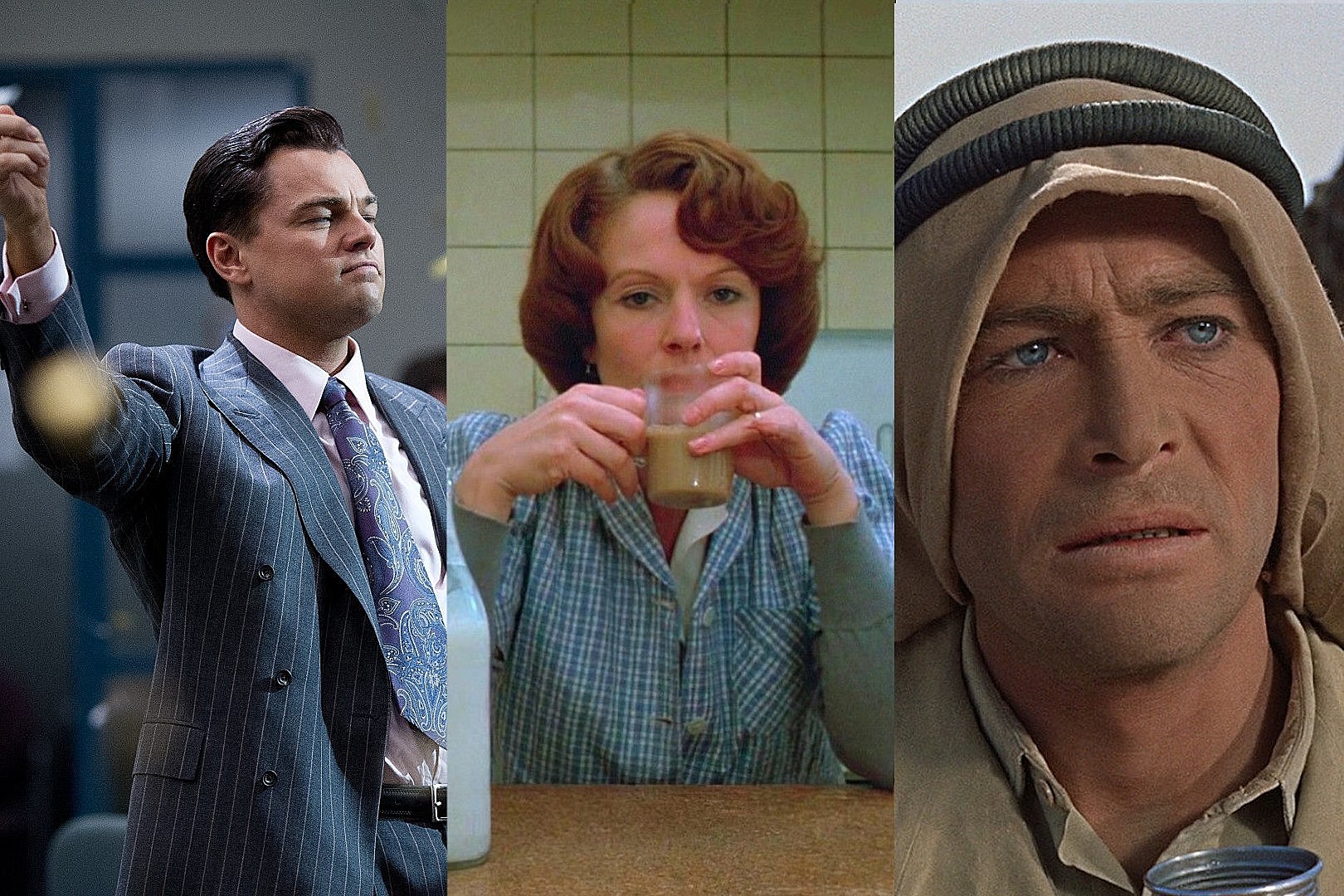
Of course, there are exceptions. There are long films that earn their runtime. The Godfather Part II is a masterpiece of epic storytelling. Lawrence of Arabia is a visual feast that justifies its grand scale. More recently, films like The Wolf of Wall Street (three hours) have used their extended runtimes to create a sense of manic energy and excess that is essential to the story. But these are the exceptions, not the rule. And they are from a different era, an era when a long runtime was a necessity of the story, not a status symbol.
What makes these films work is that they are driven by a powerful narrative engine. They are not just a collection of scenes; they are a journey. They have a sense of purpose, a clear direction, and a relentless momentum that carries you through to the end. They use their length to build a world, to develop complex characters, and to explore profound themes. They are not long for the sake of being long; they are long because they have to be. And that is a crucial distinction that seems to be lost on many of today’s filmmakers.
The Verdict
So here’s the verdict. The three-hour movie is not a sign of artistic genius. It’s a sign of a broken system. It’s a symptom of directorial ego, a lack of discipline, and a fundamental misunderstanding of what makes a story great. It’s time to stop pretending that longer is better. It’s time to demand more from our filmmakers. More focus. More precision. And for the love of God, more editing.
Because a great film isn’t about how long you can hold an audience’s attention. It’s about what you do with the time you have. And right now, Hollywood is wasting ours. We are not asking for less ambition. We are not asking for simpler stories. We are asking for better storytelling. We are asking for films that respect our time, our intelligence, and our bladders. We are asking for a return to the art of the two-hour masterpiece. Is that really too much to ask?
People are saying things you need to hear.
Hot takes. Contrarian reads. The conversation that happens after the credits roll. Pro members get in. Everyone else gets the blurred preview.
The Discussion
Sign in to join the discussion.
Sign InNo comments yet. Be the first to weigh in.