The VerdictMarch 8, 20267 min readcriticism, rotten-tomatoes, industry
The Number That Ate Film Culture
There is a single number that now determines whether a film gets a wide release, whether a studio greenlights a sequel, whether a director gets their next project funded, and whether you, sitting on your couch on a Friday night, decide something is worth 2 hours of your life.
That number is a percentage. It lives on a website with a cartoon tomato. And it is one of the most destructive inventions in the history of film criticism.
We need to talk about what the Tomatometer actually measures - because it is not what you think it is. And once you understand the math, you cannot unsee it.
What the Tomatometer Actually Measures
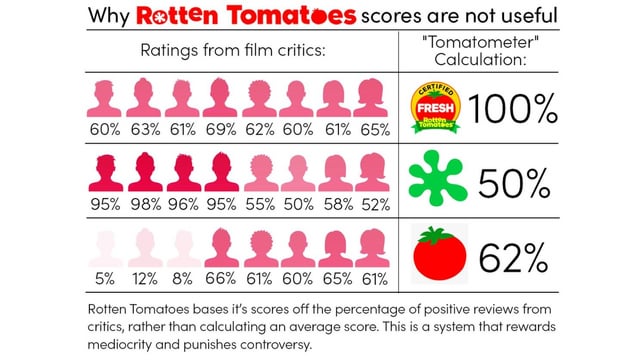
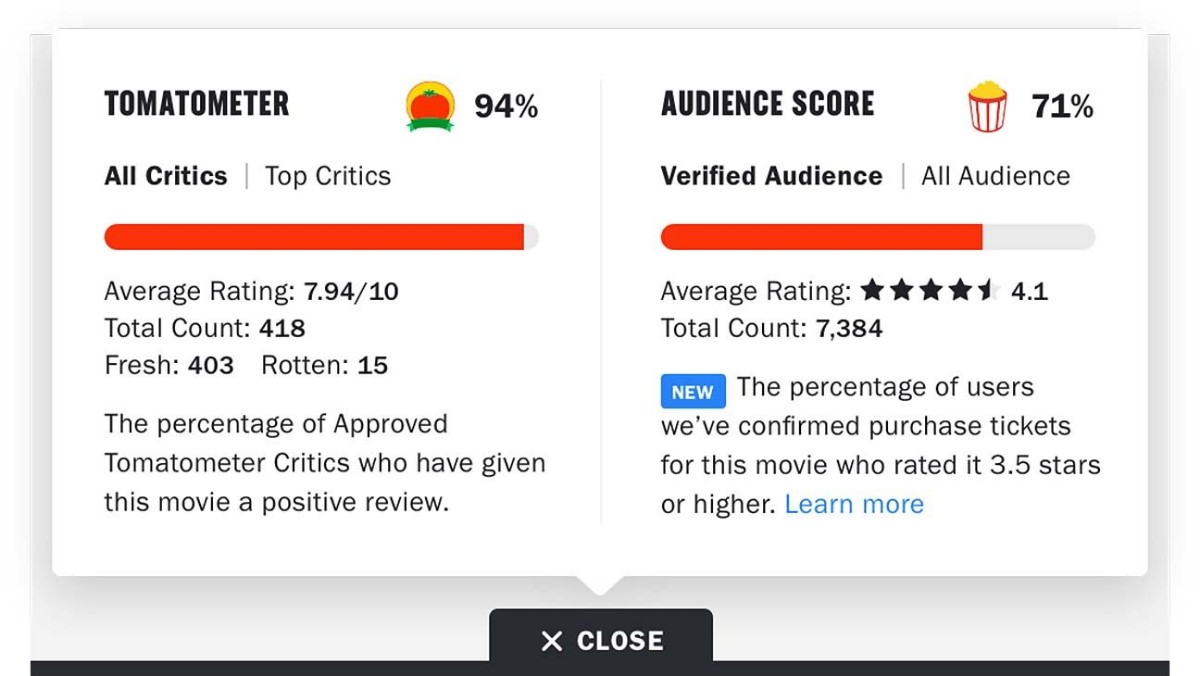
Here is the thing most people do not know: the Tomatometer is not an average score. It is a binary approval rate.
Every review gets sorted into one of two buckets: Fresh (positive) or Rotten (negative). The percentage you see is simply the share of reviews that landed in the Fresh bucket. That is it. That is the whole algorithm.
This means a film where every critic gave it a 6/10 - a perfectly mediocre, forgettable, inoffensive film - would score 100% if they all considered a 6 "positive." Meanwhile, a genuinely polarizing masterpiece where half the critics called it a 10/10 and the other half called it a 3/10 would score 50%.
The Tomatometer rewards consensus. It punishes ambition. It is a system optimized to surface the least controversial film in any given week, not the best one.
Mediocrity gets a standing ovation. Greatness gets penalized for making people feel something.
The Score Gap Nobody Talks About
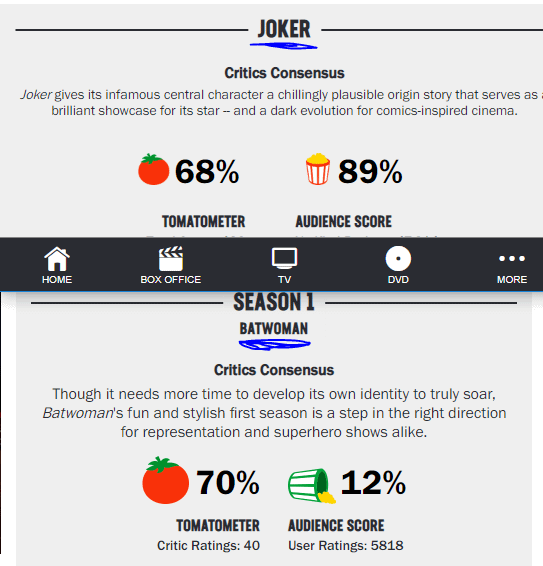
Look at that gap. Critics and audiences are not watching the same movie - or rather, they are watching the same movie and reaching completely different conclusions. This is not a bug. This is the system working exactly as designed.
The "Approved Critics" pool on Rotten Tomatoes skews heavily toward publications, which skews toward a particular demographic, which skews toward a particular set of aesthetic preferences. When a film resonates with a broad audience but not with that specific pool, the score collapses. When a film impresses that pool but leaves audiences cold, the score soars.
Neither outcome tells you whether the film is good. It tells you whether the film appealed to a specific group of people who write for specific publications. That is useful information. It is just not the information the number pretends to convey.
Watch This - The Math in 60 Seconds
This video does a better job in 60 seconds of explaining the core problem than most film critics have done in 1,000-word essays. The Tomatometer is a percentage of positive reviews. It is not a quality score. These are different things. Wildly different things.
How Studios Learned to Game It
Once the Tomatometer became the de facto arbiter of quality, studios did what studios always do: they optimized for the metric instead of the outcome.
The playbook is not complicated:
Embargo management. Control which critics see the film early and when they can publish. A film that opens with 40 reviews is easier to manage than one with 400.
Screening strategy. Show the film to critics most likely to respond positively. Skip the ones who might write a "Rotten" review.
Binary optimization. Since you only need a review to be "Fresh" - not rapturously positive - you can make films designed to be inoffensive enough to clear the threshold without being good enough to be memorable.
The result is a generation of films that are technically competent, emotionally safe, and completely forgettable. They score 75% on the Tomatometer and vanish from cultural memory within six months.
Rotten Tomatoes knows this. The "Verified Audience" score was their attempt to patch the problem. It did not work. You cannot fix a broken measurement system by adding a second broken measurement system next to it.
What We Lost
Before the Tomatometer became the dominant signal, film criticism was a conversation. Critics had voices. Readers had relationships with specific critics whose taste they trusted or loved to argue with. Roger Ebert and Gene Siskel disagreed constantly - and that disagreement was the point. The tension between their perspectives told you more about a film than any single number ever could.
We traded a conversation for a scoreboard. We traded nuance for a tomato. And the films got safer, the discourse got shallower, and the studios got richer.
The Tomatometer did not kill film criticism. But it did something arguably worse: it made film criticism feel unnecessary. Why read a 1,000-word review when you can see a number? Why develop a relationship with a critic's perspective when you can just check the percentage?
What Good Criticism Actually Does
Good film criticism does not tell you whether a film is "good." It gives you a framework for understanding what the film is trying to do, whether it succeeds on its own terms, and why that might or might not matter to you specifically.
A great critic can make you want to see a film they hated. A great critic can make you appreciate a film you dismissed. A great critic changes how you see - not just what you see.
No percentage does any of that. No percentage can.
The Verdict
Rotten Tomatoes did not break film culture by being malicious. It broke it by being convenient. The Tomatometer is a fast, shareable, legible number in a world that rewards fast, shareable, legible numbers. It won because it was easy, not because it was right.
The antidote is not a better algorithm. It is a return to voice. Specific, opinionated, accountable voices that stand behind their takes and own the consequences. Critics who say "this film is essential" and mean it - not because 87% of their peers agreed, but because they can tell you exactly why it matters and exactly who it is for.
That is what we are building here. One verdict at a time.
Pro Only
The Discourse
Unlock the full verdict experience. Scorecards, critic reviews, and The Discourse - all yours.